Updated · LoanHelp editorial team · Editorial policy
Equipment financing guide — overview of terms, docs, and how inquiries work.
Equipment broke down? — repair bill vs replacement and which financing path fits.
Year-end Section 179 deadline — placed in service by Dec 31 vs. ordered or financed (IRS Pub. 946).
New authority? Read this first — what lenders look at before you finance a tractor or trailer.
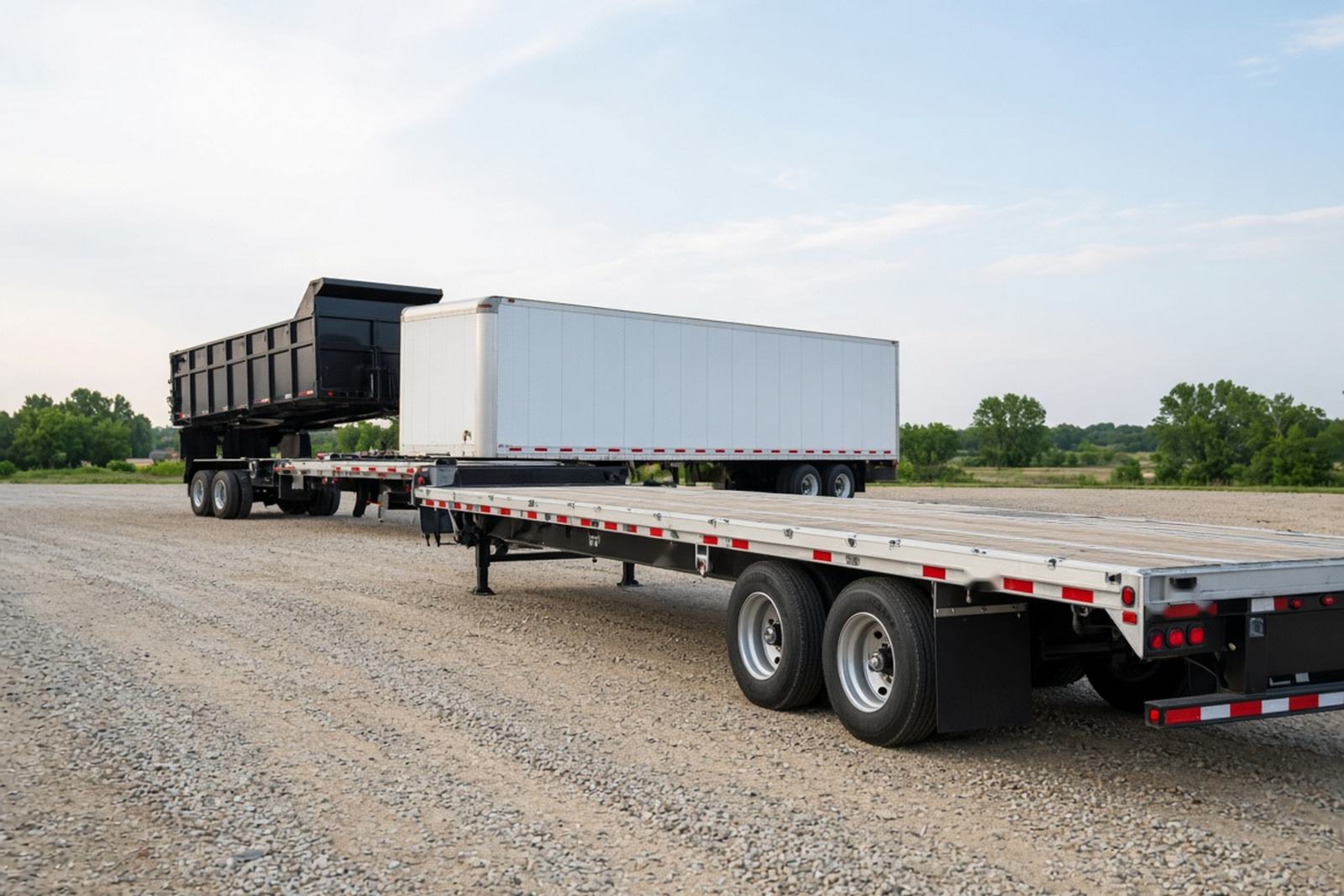
Trailers carry revenue without an engine—dry vans behind semis, equipment floats behind pickups, and dump trailers for landscaping crews. LoanHelp helps small businesses finance trailers with clear VIN titling and realistic residual expectations.
Trailer types and financing fit
Dry vans, reefers, flatbeds, lowboys, and utility dumps each have distinct resale curves. Specify construction—aluminum vs steel flatbeds change weight and price.
Equipment trailers for skid steers and mini excavators bridge construction and trucking lenders; include GVWR and axle count on your inquiry.
New vs used trailer financing
New trailers from OEMs include warranty on running gear and sometimes tire packages—clarify what is capitalized.
Used reefers need reefer unit maintenance logs; lenders treat refrigeration separately from the trailer box.
Structural repairs after rollover must be documented; undisclosed damage can void insurance and trigger default.
Lease vs loan for trailers
Section 179 may apply to purchased trailers placed in service, within IRS limits; confirm business use and weight class with your CPA using our Section 179 calculator.
Loan
Summary: Loans work when you run the same trailer until rails wear out, especially in flatbed steel where maintenance is predictable.
Detail: —
Lease
Summary: Leases with purchase options help seasonal operators who store trailers half the year and want lower payments during idle months if structured that way.
Detail: —
| Path | Summary | Detail |
|---|---|---|
| Loan | Loans work when you run the same trailer until rails wear out, especially in flatbed steel where maintenance is predictable. | — |
| Lease | Leases with purchase options help seasonal operators who store trailers half the year and want lower payments during idle months if structured that way. | — |
Trailer lender expectations
Trailer lender expectations (checklist)
- Title or MSO, bill of sale, and VIN etching photos for high-theft regions.
- Proof of liability insurance on the power unit if the trailer is not self-propelled—many lenders want the full combination covered.
- For fleet additions, schedule existing trailer notes to show total secured exposure.
Compare trailer finance offers on equal terms
Normalize term against trailer type—reefer units often get shorter max terms than dry vans of the same age.
Compare filing fees across states if you title in a business-friendly jurisdiction vs home state.
Review whether lenders finance accessories like tarps, chains, and coil racks when permanently mounted.
Check payoff flexibility if you plan to upgrade when DOT inspection cycles push you toward newer equipment.
Tires, brakes, and inspection-driven costs
Flatbed and lowboy trailers need periodic brake and tire work that does not appear on finance statements but affects whether you can keep hauling profitably—lenders may ask for maintenance reserves in stronger credit files.
Annual DOT inspections can sideline a trailer for weeks if rot is found; compare lender cure periods knowing that inspection failures are operational, not automatic payment excuses unless forbearance is written in.
Equipment float trailers for skid steers carry different theft risk than van trailers—insurance quotes should reflect how and where you park overnight, especially if funding requires proof of garaging.
Spread axle vs closed tandem configurations change bridge law compliance and resale—keep the axle setup the same across every trailer finance quote so term and advance assumptions align.
If you haul oversized loads, note permit escort costs in your business plan—they are not financed but explain seasonal cash swings to underwriters.
Confirm whether the lender files UCC in your home state or the titling state—filing fees differ and can change total borrowing cost.
What would a trailer cost per month?
Enter a price for an instant estimate. It uses illustrative example rates, so you do not need a quote or an interest rate. Not an offer.
Time in business (optional)
This does not change the estimate. It fills in your inquiry if you continue.
Enter a price or tap one above to see an estimated monthly payment. It updates as you type.
Have a lender quote already? Check its math with the equipment loan calculator.
Age at payoff
Many equipment lenders cap the trailer’s age when the loan ends — limits vary by lender, collateral type, and hours. LoanHelp does not publish lender caps here because they change and are not universal. Ask each provider: “What is the maximum age (or hour) limit at the last payment?”
Enter a model year and term to see an illustrative payoff timing estimate.
This is a planning estimate only, not approval criteria. Used machines with high hours, missing maintenance records, or repowers may face shorter terms regardless of model year.
Common questions
- Do all trailers have titles lenders can lien?
- Most commercial trailers are titled; some lowboy or dolly setups vary by state. Confirm title status before you request financing.
- Can I finance an older trailer?
- Many lenders shorten terms on aged trailers; structural inspections help approval on well-maintained units.
- Is gap insurance required?
- Policies differ; gap may be recommended when advance rates are high relative to auction values—not a universal requirement.
Related financing
Related equipment
- Semi truck financing
- Dump truck financing
- Skid steer financing
- Sewer camera / jetter financing
- Spray foam insulation equipment financing
- Hydrovac and vacuum excavator financing
- Directional drill and HDD financing
- Trencher and trenching machine financing
- Telehandler and reach forklift financing
- Stump grinder financing
- Wood chipper financing
- Street sweeper financing
Waiting on broker or shipper payments? Invoice factoring for trucking explains advances against net-30 to net-90 receivables.