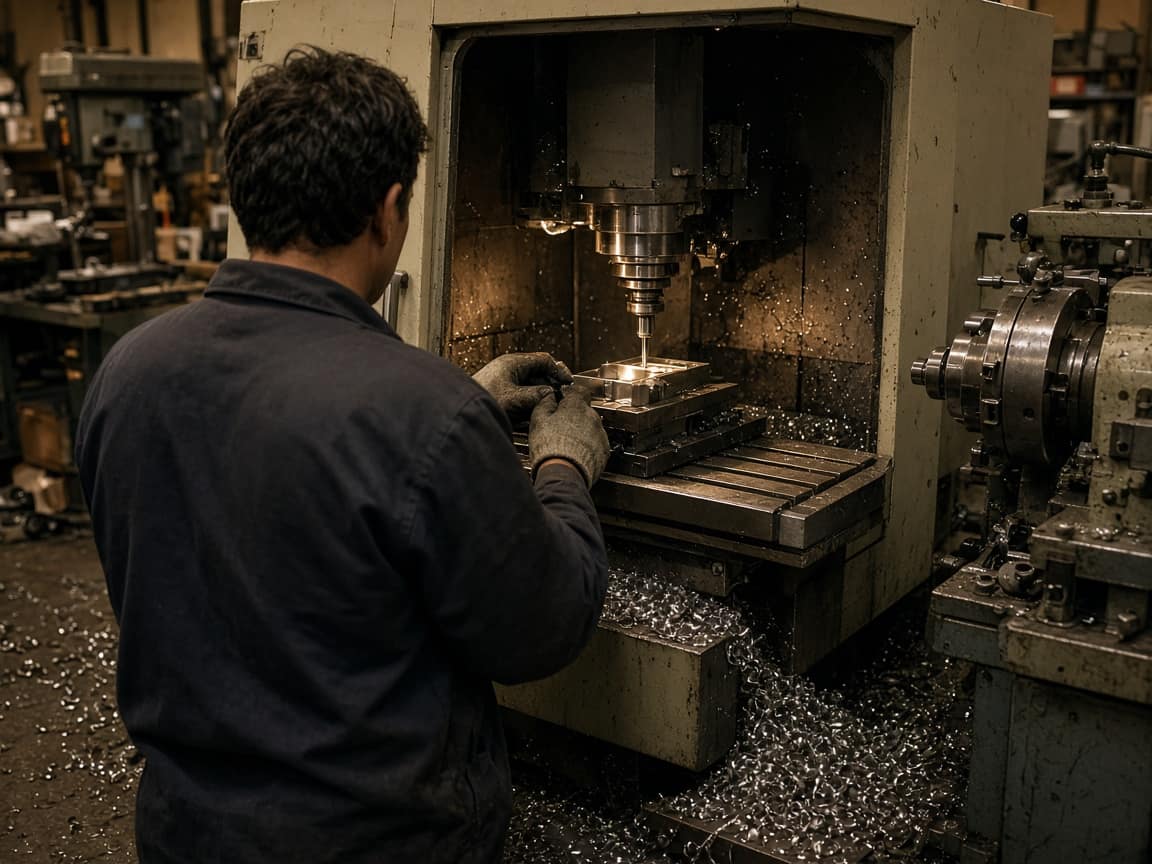
Who finances CNC equipment
Prototype shops, production aerospace suppliers, and firearm component manufacturers share financing mechanics even when parts differ. Show customer concentration and average lot sizes so payments align with margin.
Hybrid businesses adding a first CNC to replace manual mills should explain training timelines—lenders appreciate realistic ramp-up, not overnight revenue jumps.
New vs used CNC financing
New machines from distributors include factory warranty, control software versions, and option packages like probing and high-pressure coolant.
Used vertical machining centers dominate the market; way cover condition, spindle noise tests, and control retrofit history drive appraisal.
Imported machines may need voltage compliance documentation; lenders want assurance the install meets local electrical codes before funding.
Lease vs loan for CNC machines
Loans benefit shops that run machines across multiple shifts until control obsolescence, then sell or retrofit.
Operating leases with upgrade paths appear in some OEM programs for shops that want new controls every few years.
Section 179 may apply to purchased CNC placed in service within tax-year limits; precision equipment often qualifies when used for business production—confirm with your CPA and explore our Section 179 calculator.
CNC lender package
Vendor quote listing model, serial if assigned, control type, and warranty start trigger—often tied to install sign-off.
Business financials showing gross margin on machining work; job cost summaries help alternative lenders.
Insurance covering fire, water damage, and business interruption if required by lender policy on high-value cells.
Compare three CNC financing quotes
Include rigging and training in all quotes or exclude consistently—installation delays should not change rate lock assumptions silently.
Compare advance rates on controls and options vs base machine—some lenders haircut electronics faster.
Review maintenance covenants if leasing through OEM captive programs—PM schedules may be mandatory.
Evaluate prepayment if you expect to consolidate cells and sell a machine mid-term—auction values for CNC vary by control brand.
Power, coolant, and facility readiness
Three-phase power upgrades and coolant recycling systems may be prerequisites before the machine earns revenue—those costs sometimes sit outside the equipment note unless the vendor bundles turnkey install.
Lenders may ask for lease agreements or landlord lien waivers when machines anchor in rented industrial space; plan those signatures before you request funding so delivery does not sit idle waiting for legal review.
Tooling presets and probe kits can exceed five figures—itemize them on the vendor quote if you expect them in the secured amount, or plan separate working capital if the lender caps soft tooling collateral.
Multi-machine shop expansions sometimes fund one CNC first and line up a second note later—disclose planned capacity adds so lenders understand utilization growth rather than unexplained debt stacking.
Ask whether the lender requires machine acceptance sign-off before first payment—delays in first-part prove-out can shift when interest accrual begins.
CNC Machine payment calculator
Enter your own numbers. This is standard amortization math — not a quote. Fees, interim interest, and tax are not included.
- Amount financed
- —
- Estimated monthly payment (illustrative)
- Enter price and illustrative APR
Age at payoff
Many equipment lenders cap the CNC machine’s age when the loan ends — limits vary by lender, collateral type, and hours. LoanHelp does not publish lender caps here because they change and are not universal. Ask each provider: “What is the maximum age (or hour) limit at the last payment?”
If you finance in 2026 with a 60-month term, the final payment falls in 2030. A 2021 model would be about 9 years old at payoff.
This is a planning estimate only, not approval criteria. Used machines with high hours, missing maintenance records, or repowers may face shorter terms regardless of model year.
Common questions
- Can installation and rigging be financed?
- Many lenders include rigging, foundation, and freight if on the vendor invoice. Electrical upgrades may need separate capital budgets or landlord approval.
- How do lenders view used CNC with high spindle hours?
- Spindle rebuild quotes and ballbar test results support valuation. Without them, terms may shorten or require larger equity.
- Is software licensing part of CNC financing?
- Perpetual licenses on invoice may be included; subscription CAM seats usually are not collateralized.
- Do lenders require proof of skilled labor?
- They underwrite business cash flow, not individual machinist résumés, but backlog and customer diversification strengthen files.
Related equipment
LoanHelp is not a lender. This page is general education—not an offer, rate quote, or approval guarantee.
Continue to application