Updated · LoanHelp editorial team · Editorial policy
Equipment financing guide — overview of terms, docs, and how inquiries work.
Equipment broke down? — repair bill vs replacement and which financing path fits.
Year-end Section 179 deadline — placed in service by Dec 31 vs. ordered or financed (IRS Pub. 946).
Trencher financing works like other secured equipment loans and leases: the trencher on your signed dealer quote usually serves as collateral, and the offer depends on how long you have operated and how steady utility, irrigation, fiber, or drainage work looks on recent bank activity. Compare total cost, term, and how the payment sits against crew, fuel, and wear-part costs before you sign.
Buying new vs used vs leasing vs renting
Use this table to compare structures before you run the same quote through our calculators or submit an inquiry.
| Path | How it works | Often suits |
|---|---|---|
| Buying new | You finance or pay cash for a new trencher from a dealer; warranty, training, and any chain, wheel, or attachment package follow the vendor program on the quote. | Standardizing machines across crews, a long utility or fiber contract, or replacing a trencher at the end of its useful life. |
| Buying used or refurbished | You finance a pre-owned trencher when the seller documents hours, digging depth and width, chain or wheel condition, service history, and title on the proposal. | Adding a second machine without waiting on a new unit, or buying from a contractor who upgraded on a schedule. |
| Leasing | You make scheduled payments for use of the trencher with end-of-term buyout or return options spelled out in the contract. | Contractors who refresh machines on a cycle, preserving cash for crews and materials, or matching payments to contract timing. |
| Renting (day or week rate) | Short-term rental gives use of a trencher for a defined period without building equity; delivery, wear-part, and damage rules vary by rental program. | A single install, overflow work, trial work before you commit to ownership, or covering a machine that is in the shop. |
What to have ready
Dealer quote or rental-return quote listing digging depth and width, chain or wheel type, hours on used units, and any attachments on the same invoice.
Job contracts or bid backlog described in your own words — fiber or conduit runs, irrigation installs, drainage work, or trench work you now subcontract — so funders understand utilization without invented forecasts.
Time in business and recent bank statements or summaries that show how trenching work translates to deposits.
Machine type, soil, and transport questions
For the dealer: does your work call for a walk-behind or a ride-on chain trencher, a wheel or rock-wheel trencher, or a micro-trencher for shallow fiber cuts, and what depth and width does each unit on the quote reach?
For the dealer: which chains, teeth, or cutting wheels suit the soil and rock you usually dig, and which are treated as wear parts rather than secured lines on the invoice?
For the dealer: are a backfill blade, a vibratory plow, or other attachments part of the quote, and does each carry its own serial number?
For the dealer and your insurer: what does the trencher weigh on its transport trailer, and what truck, trailer, and coverage does moving it between jobs require?
For your state, your 811 or utility-locate service, and your insurer: what locate requests, permits, and records does each trench need before you dig?
When renting stops making sense
Day- and week-rate rentals can cover a single install, but repeated rental periods add up when the same crew would keep an owned trencher busy most months.
Map how many rental periods equal the price on the dealer quote you are comparing — use the equipment loan calculator and the lease vs loan calculator with your own numbers rather than assumed rental or purchase costs.
Used trenchers and private sellers
Purchases from another contractor, auction listings, or brokered refurbished trenchers need clear title, service records for the engine, drive, and digging chain or wheel, and inspection notes before a funder treats the machine as collateral.
Read how bill-of-sale, escrow, and payoff timing work on our guide to financing used equipment from a private seller.
Section 179 timing
IRS Publication 946 describes when property qualifies as placed in service. Financing approval alone does not place equipment in service — delivery, setup, and readiness for use in your business drive tax timing; confirm details with your CPA.
A purchased trencher may qualify for Section 179 within IRS limits when it is placed in service in the tax year; leased trenchers follow different deduction paths.
Trencher and trenching machine payment calculator
Enter your own numbers. This is standard amortization math — not a quote. Fees, interim interest, and tax are not included.
- Amount financed
- —
- Estimated monthly payment (illustrative)
- Enter price and illustrative APR
Age at payoff
Many equipment lenders cap the trencher and trenching machine’s age when the loan ends — limits vary by lender, collateral type, and hours. LoanHelp does not publish lender caps here because they change and are not universal. Ask each provider: “What is the maximum age (or hour) limit at the last payment?”
Enter a model year and term to see an illustrative payoff timing estimate.
This is a planning estimate only, not approval criteria. Used machines with high hours, missing maintenance records, or repowers may face shorter terms regardless of model year.
Common questions
- Can I finance a trencher?
- Trenchers on a signed dealer quote often qualify as secured equipment when the machine, serial number, and hours on used units are itemized. Our trusted financing partner sets structure after reviewing your inquiry.
- Can I finance a walk-behind and a ride-on trencher the same way?
- Both can be reviewed as equipment on a dealer quote. A ride-on unit with its own serial number and attachments is usually easier to document as collateral than a small walk-behind, so ask the dealer to itemize each machine, chain or wheel, and attachment on the quote.
- Is it better to rent or buy a trencher?
- Day- and week-rate rentals can cover a single install or a short contract without tying up capital, but repeated rental periods may exceed a loan or lease payment when your crews keep a trencher busy most months. Compare the new, used, lease, and rent structures in the comparison table above and run your dealer quote through our calculators with your own numbers.
- Can I finance a used trencher?
- Used trenchers can qualify when the seller documents engine hours, chain or wheel condition, service records, and clear title. Expect funders to weigh age and remaining useful life on the quote.
- Does LoanHelp lend on trenchers?
- No. LoanHelp is a referral service, not a lender. Our trusted financing partner sets rates, down payment, and term after reviewing your inquiry.
Related financing
Related equipment
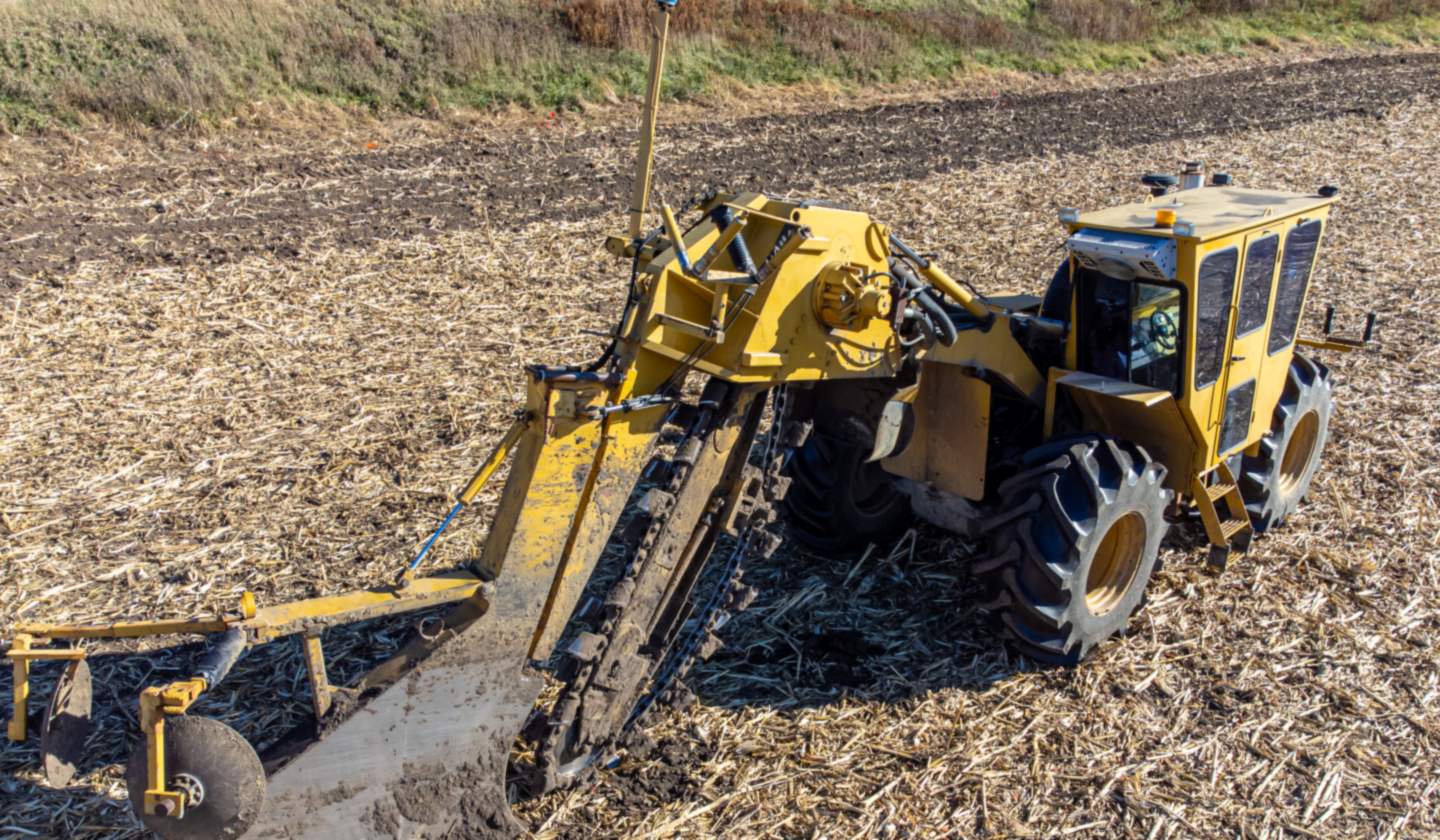
Hero photo by Wikideas1, via Wikimedia Commons, licensed CC0 1.0. Cropped, resized, and a cab door decal removed.